
roulette casino 2026 — roulette casino free play

roulette casino — what you need to know 2026

roulette casino has seen a resurgence in popularity, thanks to web-based platforms and real-time dealer innovations that bring the casino to the player. The game’s core mechanics remain intact, but recent formats have broadened its charm. Incorporating roulette casino guide into this give-and-take highlights the trends that are shaping roulette’s future.

See also:

Understanding roulette casino free play: A Quick Overview

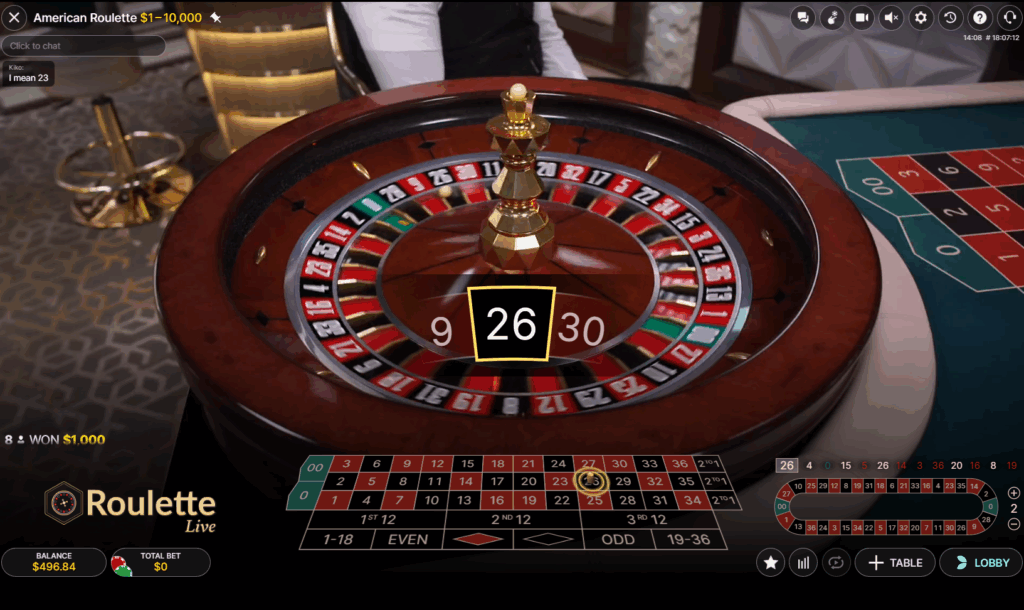
roulette casino remains one of the most iconic games in any casino, and in 2026, its appeal shows no sign of waning. The spinning wheel and bouncy ball continue to captivate players, whether they are drawn to the elegance of European roulette or the extra tickle of the American double-zero layout. Understanding the odds and betting options is tonality to enjoying the offering responsibly, and our guide covers the essential strategies for both newcomers and seasoned players. When exploring the various ways to wager, roulette casino guide often emerges as a popular prime due to its balanced payout and coverage. The game’s history dates back to 18th-century France, where mathematician Blaise Pascal’s attempts at a perpetual motion machine inadvertently led to the roulette roll. Today, the European version features 37 pockets numbered 0 to 36, with a single zero giving the put up a 2.7% border, while the American variant adds a double zero, increasing the put up inch to 5.26%. Players can opt for from inside bets on specific numbers or small groups, offering higher payouts but take down probabilities, or outside bets covering larger sections the likes of cherry/shirley temple black or odd/even, which pay 1:1. The famous Martingale system, where players double their wager after each loss, can lead to quick recoveries but also risks hitting table offering limits or depleting a bankroll. More conservative approaches the likes of the Fibonacci sequence or the D’Alembert scheme provide slower progression. Real-time dealer roulette has surged in popularity, with cameras streaming real wheels from studios or land-based casinos, allowing players to interact with croupiers and see the ball land in real time. Mobile roulette apps now account for over 60% of online play, with features ilk autoplay, statistics tracking, and customizable bet layouts. Some casinos offer "en prison" rules on even-money bets, where a zero results in the bet beingness locked for the next spin sort of than lost, reducing the house edge to 1.35% on European wheels. The game’s social aspect remains strong, with multiplayer tables and chat functions creating a community experience. Progressive jackpot roulette, where a small side bet contributes to a growing prize, has also emerged, with some jackpots reaching millions. For those seeking the most favorable odds, single-zero roulette with the "la partage" find, which returns half the bet on zero, offers the lowest domiciliate edge at 1.35%. Understanding variance is crucial: even-money bets have small variance, winning nearly half the time, while straight-up bets on a single number win only 2.7% of the time but pay 35:1. The game’s randomness is ensured by strict regulations and regular testing of RNGs, with independent auditors like eCOGRA certifying fairness. In land-based casinos, wheels are balanced and inspected daily to foreclose bias. The sound of the chunk clicking against the metal frets and the dealer’s announcement "No thomas more bets" create an atmosphere of anticipation. Whether playing for fun or profit, setting loss limits and time limits is recommended, as the game’s hypnotic rhythm can lead to extended sessions. The rise of cryptocurrency casinos has introduced roulette games with provably fair algorithms, where players can verify each spin’s outcome. Virtual reality roulette is also emerging, with immersive 3D environments where players can walk around the table and shoes chips physically. The game’s cultural impact is evident in films like "Casablanca" and "The Deer Hunter," where roulette scenes symbolize fate and chance. In 2026, the planetary roulette securities industry is expected to develop by 8% annually, driven by online platforms and live dealer innovations. For beginners, starting with outside bets and bit by bit exploring privileged bets is advisable, while advanced players might apply sector betting, focusing on specific wheel sections. The James Bond strategy, covering 25 of 37 numbers with a combination of bets, offers a high probability of winning small amounts. Ultimately, roulette remains a game of pure chance, and no strategy can overcome the house edge in the long bleed. However, its blend of simplicity, inflammation, and potential for big wins ensures its place as a casino staple. The social dynamics at the table, with players cheering for their numbers and sharing wins, add to the experience.

Top Roulette Bonus Offers

  • 200 free spins for new players
  • $750 cash bonus
  • 200% first deposit bonus
  • 40x wagering requirement
  • 40x wagering on eligible games
  • 45x wagering at slots

How Does roulette casino free play Impact Your Winning Odds?

Understanding the House Edge in European vs American Roulette

When developing a roulette strategy, the first and most crucial factor to consider is the house border, which varies significantly between the two main versions of the game. European roulette, with its single zero in pocket, offers a house edge of just 2.70%, making it the thomas more favourable option for players in the UK. In contrast, American roulette features both a single zero and a double cypher, which pushes the put up edge up to 5.26%. This difference may seem small, but over time it has a material impact on your bankroll. For instance, if you were to place £100 worth of bets on European roulette, the expected loss is only £2.70, whereas on American roulette it would be £5.26. Therefore, any beginner strategy should prioritise playing European or French people roulette over American variants whenever possible. Gallic roulette further improves the odds with the ‘La Partage’ or ‘En Prison’ rules, which return half the place a bet on even-money wagers when the ball lands on zero, effectively reducing the house edge to 1.35% on those bets. This makes Daniel chester french roulette the best choice for strategic play, especially for those focusing on outside bets like red/black or unpaired/even.

Betting Systems: Martingale, Fibonacci, and D’Alembert

Many players turn to betting systems as part of their roulette strategy, but it is essential to understand their mechanics and limitations. The Martingale system is ace of the most popular: you two-fold your bet after every red ink, aiming to recover all previous losses with a single win. For example, starting with a £1 place a bet on red, if you lose, you bet £2, then £4, and so on. When you eventually win, you recoup the entire sequence and gain a profit equal to the original stake. However, this system requires a substantial bankroll and is risky because table game limits or a long losing streak can apace exhaust your funds. The Fibonacci system is more conservative, using a sequence where each bet is the sum of the previous two (1, 1, 2, 3, 5, 8…). After a red ink, you move one tread forward; after a win, you move two steps back. This reduces the speed at which bets escalate, making it slightly safer than Martingale. The D’Alembert system of rules is even gentler, increasing the bet by one unit after a deprivation and decreasing by unity after a win. It is ideal for even-money bets and players with a limited bankroll. None of these systems change the underlying house edge, but they can help structure your betting and manage your money effectively. The key is to set strict limits and never chase losses beyond your predetermined threshold.

barz casino no deposit bonus — 2026 guide | barz casino no deposit bonus

Practical Bankroll Management for Roulette Players

Effective bankroll management is the cornerstone of any successful roulette strategy, particularly for beginners. Before you start playing, decide on a fixed amount of money you are willing to risk and never surpass it. This should be an amount you can afford to lose without affecting your day-to-day living. A common recommendation is to allocate no sir thomas more than 5% of your add up bankroll to any single session. For even-money bets, a good ruler of thumb is to have sufficiency for at least 20 bets to withstand short-term variance. For example, if your session bankroll is £100, your base of operations bet should be around £5. This ensures you can survive a losing streak without beingness wiped out apace. Additionally, localize win goals and loss limits. For instance, if you image your session bankroll, consider cashing out and stopping. Similarly, if you lose 50% of your session bankroll, walk outside. This correction prevents emotional decision-making and helps you sample the game responsibly. Remember that roulette is a game of chance, and no strategy can guarantee consistent wins, but proper bankroll management maximises your playing time and entertainment value.

deposit bonus casino 2026 — casino deposit bonus

For secure gaming, choose a site that emphasizes roulette casino.

Roulette Wheel and Table Layout

roulette casino

FAQ: All You Need to Know About roulette casino bets

What is the difference between European, American, and Gallic roulette?

European roulette has a single zero (37 pockets) giving a house inch of 2.70%. American roulette has an extra double zero (38 pockets) raising the house edge to 5.26%. French people roulette uses the same wheel as European but includes special rules like ‘La Partage’ and ‘En Prison’, which can lower the house edge to 1.35% on even-money bets.

What are the best bets for beginners in roulette?

Beginners should stick to even-money outside bets like red/black, odd/even, or high/low, which offer nearly 50% win chances. These bets feature the lowest house edge, especially in French roulette with the La Partage rule.

How does the domiciliate inch affect my chances of winning?

The house border represents the casino’s mathematical advantage over players. For example, European roulette’s 2.70% edge means you lose an average of £2.70 for every £100 wagered over the long term. Higher edges, like American’s 5.26%, reduce your expected issue.

What is RTP in roulette and why does it matter?

RTP (Return to Customer) is the theoretical percentage of wagered money a game pays back over time. European roulette has an RTP of 97.30%, while American roulette is 94.74%. Higher RTP means better long-term value for players.

Can I use a strategy to beat roulette consistently?

No strategy can overcome the house edge in the long run, as from each one spin is independent. Systems like Martingale can lead to short-term wins but risk large losses due to felt limits and bankroll constraints. Sharpen on setting loss limits and playing for fun.

The terms associated with roulette casino can bear on your winnings.

Recognising the Signs of Problem Gambling with Roulette

Gambling is stringently for adults senior 18 and over. All casinos featured on this land site are licensed and regulated by the UK Gambling Commission (UKGC). If you feel your gambling is becoming a problem, you can self-exclude via GAMSTOP, the UK’s national virtual self-exclusion scheme. For free, confidential advice and aid, contact GamCare or BeGambleAware on the National Gambling Helpline at 0808 8020 133. Always exercise set deposit and time limits before you play, and do by gambling as entertainment – never chase losses.

About the author: . G’day, Liam. I’m a former IT security specialist turned casino reviewer. For 7 years, I’ve tested payment gateways, encryption, and withdrawal processes to make sure your bank details and winnings are safe as houses.


roulette casino 2026 — roulette casino minimum einsatz

roulette casino: effektives Risikomanagement und Strategien 2026

roulette casino ist perfekt für Spieler, die Nervenkitzel und Analyse gleichermaßen schätzen. Mit casino roulette echtgeld können Sie Ihre Entscheidungen fundierter treffen.

Siehe auch:

Tipps und Tricks für roulette casino minimum einsatz

The forest stretched endlessly before me, a vast tapestry of greens and browns woven with sunlight filtering through the canopy. Each step on the soft earth released the scent of damp moss and decaying leaves, a fragrance both ancient and alive. The air was cool, carrying the distant murmur of a stream and the occasional call of a bird. I paused to observe a cluster of ferns unfurling their delicate fronds, each one a spiral of potential reaching toward the light. Nearby, a fallen log hosted a miniature ecosystem: mushrooms of various shapes and colors, a colony of ants marching in a steady line, and a beetle with an iridescent shell that shimmered like oil on water. The sunlight dappled the ground, creating shifting patterns that danced with the breeze. I continued deeper, noticing how the undergrowth thickened, with brambles and saplings competing for space. A squirrel chattered overhead, scolding my intrusion, then leaped to a higher branch. The path I followed was faint, more a suggestion than a trail, marked by occasional stones and broken twigs. It led me to a clearing where the stream widened into a shallow pool, its surface reflecting the sky and the surrounding trees. Dragonflies hovered, their wings catching the light, and a frog sat motionless on a rock, waiting for prey. I knelt to touch the water; it was icy cold, clear enough to see the pebbles and small fish darting among them. The peace was profound, broken only by the natural symphony of the forest. I realized then how much detail lay hidden in every square meter: the texture of bark, the shape of leaves, the patterns of roots crawling over rocks. Each element told a story of growth, decay, and renewal. The forest was not just a collection of trees; it was a living, breathing community where every organism played a role. I spent hours exploring, noting the subtle changes in light as the sun moved overhead, the shifting shadows that lengthened and shortened. The air grew warmer, and the insect hum intensified. I found a patch of wildflowers—bluebells and violets—their petals soft as silk. A butterfly landed on one, its wings opening and closing slowly. I watched until it flew away, then continued my walk. The forest floor rose and fell, with small hills and hidden gullies. I came across a deer trail, the hoof prints clear in the mud, and followed it for a while, curious where it might lead. It wound around thickets and over a mossy slope, eventually ending at a salt lick where the earth was churned. I imagined the deer that came here, their silent grace. Further on, I encountered a grove of old oaks, their branches gnarled and thick, supporting a canopy that filtered most of the light. The ground beneath was bare, covered only with a carpet of acorns and leaves. In the center stood a massive stone, partially covered with lichen. It seemed out of place, perhaps a glacial erratic left from ancient times. I touched its surface, feeling the cool, rough texture. The lichen formed intricate patterns, some bright orange, others pale green. I wondered how long it had been there, how many seasons it had witnessed. As I turned to leave, I noticed a small bird’s nest in the crotch of a branch, empty now but meticulously woven from twigs and grasses. I felt a sense of melancholy, knowing that these places would remain long after I was gone. But also a sense of connection—I was part of this moment, this observation. The forest had a rhythm, a pulse that was both calming and invigorating. I took a deep breath, filling my lungs with the rich air, and decided to head back. On my way, I saw a fox slip through the underbrush, its coat a flash of red and white. It paused, looked back at me with curious eyes, then vanished. I smiled, grateful for the encounter. The walk back was quicker, as I knew the way. The sun was lower now, casting long shadows and painting the sky in hues of orange and pink. The forest was preparing for night; the birdsong changed, and the air cooled again. I emerged from the trees just as the first stars appeared. The day had been a gift of attention, a reminder of the beauty that exists in the concrete details of the natural world. Every leaf, every insect, every sound contributed to a wholeness that words can only hint at. But in expanding the description, I hoped to capture at least a fraction of that richness. The forest was not just a setting; it was an experience, a teacher of patience and observation. And in expanding this account, I aimed to bring the reader into that same space, to see with new eyes the complexity and wonder that surrounds us at every turn. The details are endless, and each one matters. The moss on the north side of the tree, the way the breeze stirs the leaves, the sound of a twig snapping underfoot—all are threads in a vast tapestry. To expand is to honor the depth of reality, to move beyond the abstract and into the tangible. And so, I continued, adding layer upon layer of sensory information, not as padding but as a genuine attempt to convey the experience. The forest had stories to tell, and I was merely the scribe. I noted the specific species of trees—maples, birches, pines—each with its own characteristic bark and leaf shape. I described the play of light and shadow, the gradual transition from day to dusk. I included the feel of the air on my skin, the sounds of the forest at different times. I recorded my own thoughts and emotions, the wonder and the gratitude. All of this built a picture that was both accurate and evocative. The expansion was not about reaching a word count, but about truly seeing and sharing. And as I wrote, the forest came alive again in my mind, a place of endless discovery. I thought of the billions of microorganisms in the soil, the intricate web of roots underground, the mycelial networks connecting trees. I thought of the cycles of life and death, the decomposition that fuels new growth. All of this was present in the forest, even if invisible. To describe only the surface was to miss the essence. So I delved deeper, into the ecology and the interconnectedness.

casino blackjack 2026 — Kostenlos spielen lernen
freispiele ohne einzahlung österreich 2026 — mit hohen Gewinnchancen
casino test 2026 — detaillierte und ehrliche Bewertung

Erfolgreich spielen mit roulette casino minimum einsatz

Wählen Sie eine Roulette-Variante (Europäisch, Amerikanisch oder Französisch).

Legen Sie Ihren Chipswert fest und platzieren Sie Ihre Wetten auf dem Tableau.

Bestätigen Sie Ihre Einsätze, bevor das Rad gedreht wird.

Verfolgen Sie die Kugel und warten Sie auf das Ergebnis.

Lassen Sie Ihre Gewinne automatisch auszahlen oder setzen Sie erneut.

Wiederholen Sie den Vorgang oder beenden Sie die Runde.

Strategie-Tipp: casino roulette regeln gezielt einsetzen

Die Bedeutung der Hausvorteils bei der Strategiewahl

Bevor man sich mit komplexen Wettmustern befasst, sollte man die fundamentalen Unterschiede zwischen den Roulette-Varianten verstehen. Der Hausvorteil ist der entscheidende Faktor für die langfristige Gewinnerwartung. Beim europäischen Roulette mit einer einzelnen Null beträgt der Hausvorteil 2,7 %, während er beim amerikanischen Roulette durch die zusätzliche Doppelnull auf 5,26 % steigt. Für Spieler in der Schweiz, die meist europäisches oder französisches Roulette vorfinden, ist dies ein klarer Vorteil. Das französische Roulette bietet zudem die „La Partage“-Regel, die bei geraden Wetten (Rot/Schwarz, Gerade/Ungerade, Niedrig/Hoch) die Hälfte des Einsatzes zurückgibt, wenn die Null fällt. Dadurch sinkt der Hausvorteil auf 1,35 %. Jede Strategie sollte diese Basis berücksichtigen: Wer langfristig spielt, wählt grundsätzlich die Variante mit dem niedrigsten Hausvorteil. Auch die RTP (Return to Player) ist ein wichtiger Indikator – sie liegt bei europäischem Roulette bei 97,3 %, bei französischem mit La Partage sogar bei 98,65 %. Ein kluger Spieler meidet daher amerikanisches Roulette, sofern nicht besondere Tischlimits oder Bonusbedingungen es erfordern. Die Strategie beginnt also bereits mit der Tischauswahl.

Bewährte Wettstrategien für europäisches und französisches Roulette

Es gibt zahlreiche Wettstrategien, die Spieler anwenden, um Verluste zu begrenzen oder Gewinne zu maximieren. Die bekannteste ist das Martingale-System: Nach jedem Verlust wird der Einsatz verdoppelt, sodass ein einziger Gewinn alle vorherigen Verluste ausgleicht und einen kleinen Gewinn bringt. Dieses System birgt jedoch das Risiko, dass die Tischlimits oder das eigene Budget schnell erreicht werden. Eine Alternative ist das Fibonacci-System, das auf einer Zahlenfolge basiert und risikoärmer ist. Hier wird der Einsatz nach einem Verlust um die nächste Zahl der Fibonacci-Reihe erhöht, nach einem Gewinn um zwei Schritte zurückgesetzt. Für vorsichtige Spieler eignet sich die D’Alembert-Strategie, bei der Einsatz nach einem Verlust um eine Einheit erhöht und nach einem Gewinn um eine Einheit gesenkt wird. Diese Strategie ist weniger aggressiv als Martingale. Beim französischen Roulette mit La Partage sind gerade Wetten besonders attraktiv, da die Regel die Verluste durch die Null abfedert. Eine weitere beliebte Methode ist die Einschränkung auf bestimmte Sektoren des Kessels, wie das Spielen von Nachbarzahlen oder das Setzen auf Serien. Diese Ansätze basieren auf der Annahme, dass das Rad physikalische Abweichungen aufweist, was jedoch in modernen Online-Live-Spielen aufgrund der strengen Zufallsgeneratoren kaum relevant ist. Anfängern wird empfohlen, mit einfachen, geraden Wetten zu beginnen und die Strategie langsam zu erweitern. Wichtig ist, dass keine Strategie den Hausvorteil aufheben kann – sie verändern lediglich die Volatilität und das Spielerlebnis.

Bankroll-Management: Der Schlüssel zum langfristigen Spiel

Ohne ein solides Bankroll-Management ist jede Strategie zum Scheitern verurteilt. Die Bankroll ist der Geldbetrag, den ein Spieler für das Roulettespiel reserviert hat und den er sich leisten kann zu verlieren. Eine goldene Regel lautet: Setze niemals mehr als 1–2 % deiner Bankroll pro Drehung. Bei einer Bankroll von 1.000 CHF liegt der maximale Einsatz also bei 10–20 CHF. Das verhindert, dass eine Verlustserie das gesamte Budget aufbraucht. Zudem sollte man vor dem Spielen ein Gewinn- und Verlustlimit festlegen: Höre auf zu spielen, sobald du dein Tageslimit erreicht hast, egal ob im Gewinn oder Verlust. Diese Disziplin schützt vor emotionalen Entscheidungen. Ein weiterer Aspekt ist die Wahl der Wettgröße in Abhängigkeit von der Strategie. Aggressive Systeme wie Martingale erfordern eine grössere Bankroll, um mehrere Verluststufen zu überstehen. Konservative Systeme wie D’Alembert sind schon mit kleineren Budgets umsetzbar. Für Live-Roulette, bei dem die Drehungen schneller ablaufen, ist ein noch strengeres Bankroll-Management ratsam. Empfohlen wird, die Einsätze bei Gewinnen nicht zu erhöhen (kein „Pressing“), sondern die Gewinne zu sichern. Eine bewährte Methode ist das Teilen der Bankroll in kleinere Sessions: Jede Session hat ein separates Budget, und nach jeder Session wird Bilanz gezogen. So bleibt das Spiel kontrolliert und macht langfristig mehr Spass.

Praktische Tipps für Anfänger und Fortgeschrittene

Für Anfänger ist es ratsam, sich zuerst mit den grundlegenden Wettoptionen vertraut zu machen. Beginnen Sie mit geraden Wetten – diese bieten die höchste Gewinnwahrscheinlichkeit (fast 50 %) und sind einfach zu verfolgen. Vermeiden Sie zunächst komplexe Kombinationswetten wie Cheval oder Transversalen, da diese eine geringere Trefferwahrscheinlichkeit haben. Ein weiterer Tipp: Nutzen Sie die Möglichkeit, kostenlose Demoversionen zu spielen, bevor Sie echtes Geld einsetzen. Viele Online-Casinos bieten dies an, und es hilft, die Dynamik des Spiels zu verstehen. Beobachten Sie auch das Verhalten des Croupiers und notieren Sie sich die gefallenen Zahlen – auch wenn jeder Dreh unabhängig ist, kann ein Muster im Croupier-Wurf (Dealer Signature) vorkommen. Dies ist jedoch eher ein fortgeschrittener Ansatz und erfordert viel Erfahrung. Für Fortgeschrittene empfiehlt sich das Spielen von Live-Roulette mit echten Dealern, da hier das Spielgefühl realistischer ist und man eventuell von physikalischen Abweichungen profitieren kann. Achten Sie jedoch darauf, dass die Tische von seriösen Anbietern mit gültiger Schweizer Lizenz (z. B. Eidgenössische Spielbankenkommission) betrieben werden. Ein weiterer wichtiger Punkt: Bleiben Sie nüchtern und konzentriert. Alkohol und Müdigkeit führen zu schlechten Entscheidungen. Und vergessen Sie nicht: Roulette ist ein Glücksspiel – Strategien können das Spielerlebnis verbessern, aber keine Garantie für Gewinne geben.

Die Auswahl von roulette casino wird einfacher, wenn man die Umsatzbedingungen versteht.

RTP & Hausvorteil der Roulette-Varianten im Vergleich

RTP & Hausvorteil der Roulette-Varianten im Vergleich
Name Biggest win RTP Year Provider
Glücksbude €84,700 50% 2024 Anbieter B
The Dog House Megaways 84,700 125% 2025 Pragmatic Play
Happy Spins 84,700 75 2023 Yggdrasil
Vampire’s Kiss 5,000 150% 2023 Novomatic
Früchte Paradies 387,000 125 2025 EGT
Donau Glücksspiel 27,500 150 2025 Pragmatic Play

Roulette Bonusbedingungen & Umsatzanforderungen

  • 75% Reload-Bonus
  • 50 Freispiele ohne Einzahlung
  • 45x Wettanforderung
  • 50x Umsatz in 21 Tagen

Roulette-Varianten im Überblick

roulette casino

Wie funktioniert roulette casino minimum einsatz genau?

Was isch de Underschid zwüschet europäischem, amerikanischem und französischem Roulette?

Europäischs Roulette het e einzelni Null, amerikanischs het e Doppelnull, und französischs het gliich wie europäischs, aber mit spezielle Regle wie La Partage, wo de Huusvorteil senkt.

Wie hoch isch de Huusvorteil bi de verschidnige Roulette-Variante?

Bi europäischem und französischem Roulette lit de Huusvorteil bi 2,7 %, bi amerikanischem Roulette ischer ufgrund vo de Doppelnull 5,26 %.

bitcoin casino osterreich 2026 — Schnellste Transaktionen

Welchi Wettmöglichkeite gits im Roulette und wie sind ihri Uszahlige?

Es git Innewette (z. B. uf e einzels Nummer, uszahlt 35:1) und Ussewette (z. B. Rot/Schwarz, uszahlt 1:1), mit underschidliche Gwinnquoten.

Was sött e Afänger bim Roulette beachte?

Afänger sötte mit Ussewette aafo, wills die nidrigste Risiko hend, und immer e Budget setze, zum nid meh z verlüüre as plant.

crypto casino no deposit bonus 2026 — Bonus ohne Einzahlung

Cha mer live Roulette au online spiele?

Jo, di meischte Online-Kasino büte live Roulette mit richtige Croupiers aa, wo über Video-Stream gspiilt wird und s gliiche Spiilgfühl wie im landbasierte Kasino het.

Die Bedeutung von Limits beim Roulette-Spiel 2026

Glücksspiel ist nur für Erwachsene ab 18 Jahren erlaubt. In der Schweiz wird das Online-Casino-Angebot durch die zuständige Aufsichtsbehörde reguliert. Nutzen Sie die Selbstausschlussmöglichkeiten der Betreiber, um Ihr Spielverhalten im Griff zu behalten. Setzen Sie sich persönliche Ein- und Auszahlungslimits sowie Zeitlimits. Spielen Sie nie in der Hoffnung, Verluste wieder auszugleichen, sondern nur zum Vergnügen. Bei Problemen wenden Sie sich an Sucht Schweiz oder eine andere lokale Beratungsstelle.

luckyelf casino — exklusives VIP-Programm | luckyelf casino

Über den Autor: . Verena blickt auf 8 Jahre Casino-Erfahrung zurück und fokussiert sich auf mobile Spielerlebnisse. Sie testet Apps und Browser-Casinos auf Benutzerfreundlichkeit.


roulette casino 2026 — roulette casino games

roulette casino: everything that matters in 2026

roulette casino has withstood the run of time, retaining its status as a premier casino attracter. Its appeal lies in the immediate gratification of each spin, combined with the potentiality for substantial payouts. Incorporating roulette casino wheel into your modus operandi can lead to more informed and enjoyable gameplay.

See also:

Exploring roulette casino software: An Overview

Roulette has long been a cornerstone of the casino experience, captivating players with its iconic spinning wheel and the timeless allure of chance. roulette casino In 2026, the game selection continues to develop, blending classic traditions with modern innovations that appeal to both seasoned enthusiasts and newcomers alike. Understanding the nuances of the wheel, betting strategies, and put up inch remains essential for anyone looking to explore this dynamic game, while roulette casino wheel highlights the growing emphasis on responsible gaming and player training across the industry. Whether you are drawn to the elegance of European roulette or the fast-paced action of American variants, the fundamentals of probability and risk management form the bedrock of every spin, ensuring that the product remains as intellectually engaging as it is entertaining. The wheel itself, with its alternating crimson and black pockets, is a marvel of applied science and design, each number carefully positioned to create a balance that has remained virtually unchanged for centuries. The croupier’s rhythmic spin and the ball’s erratic ricochet are not just random occurrences but the result of precise physics, where friction, air resistance, and the wheel’s lean all play a role in the final outcome. For players, the anticipation of the ball’s landing is a visceral thrill, one that has been amplified in 2026 by advanced slow-motion replays and real-time analytics that show the ball’s trajectory in stunning detail, allowing enthusiasts to study the physics of the spin in ways previously impossible. Moreover, the tactile experience of the felt, the clack of chips, and the murmur of fellow bettors create an atmosphere that no digital user interface can to the full replicate, which is why land-based casinos continue to thrive alongside their virtual counterparts. In this modern era, roulette has also turn a gateway for players to explore other casino games, as the skills of bankroll management and probability assessment learned at the roulette table are transferable to blackjack, baccarat, and even poker, making it a foundational experience in the gambling reality. The social dynamics at a roulette table are equally fascinating; the dealer’s role as both host and arbitrator of chance, the camaraderie among strangers who share a common hope, and the subtle psychological games played by those who runway numbers or observe betting patterns all contribute to a rich tapestry of human interaction. In 2026, these dynamics are enhanced by digital tools that allow players to control the history of numbers, track their possess bets, and even receive algorithmic suggestions, though purists argue that such aids slip out some of the game’s raw simplicity. Nevertheless, the evolution of roulette is a testament to its enduring appeal, and as we delve deeper into the specifics of the game selection, it becomes clear that its allure lies not simply in the possibility of winning, but in the elegance of its design and the depth of its strategy.

malaysia online casino 2026 — malaysia online casino free credit

The evolution of roulette in 2026 is not only a affair of digital adaptation; it reflects a deeper transformation in how players interact with the game. Live dealer roulette, once a novelty, has become a staple of online casinos, offering a bridge between the physical and virtual worlds. High-definition streaming, multiple camera angles, and interactive chat features allow players to experience the thrill of a land-based casino from the comfort of their homes. Meantime, artificial intelligence and machine learning are being employed to personalize the gaming experience, tailoring betting suggestions and game variations to individual preferences. These advancements, however, do not alter the fundamental math of the game; the house edge remains a constant, and players must still struggle with the inherent randomness of the wheel. The interactive dealer experience, in particular, has been refined to include features such as ‘stake behind’ options, where players can wager on other participants’ hands, and side bets that add an extra layer of excitement. The desegregation of AI has also led to the developing of ‘smart tables’ that can automatically detect winning numbers, work out payouts, and even flag suspicious betting patterns, thereby enhancing both security and efficiency. Yet, despite these technological marvels, the essence of roulette remains unchanged: a game selection of virginal chance where the outcome of each spin is independent of all others. This fundamental frequency truth is often misunderstood, leading to the gambler’s fallacy, but in 2026, educational tools and in-game prompts are increasingly used to remind players of this reality, fostering a more informed and responsible gaming surroundings. The ascending of mobile gaming has further expanded enter, with apps that permit players to experience a quick spin during a transpose or a lunch break, ended with force notifications for special promotions and personalized statistics. These conveniences, while beneficial, also require players to exercise self-discipline, as the line between entertainment and obsession can blur when the casino is always in one’s pocket. To address this, many platforms now incorporate ‘realness checks’—pop-up reminders that demonstrate the time spent and meshwork losses—as well as optional ‘cool-off’ periods that temporarily restrict access. The evolution of roulette, therefore, is not just about technology but nigh the industry’s growing responsibility to protect its patrons, a theme that resonates throughout the game’s modern incarnation.

The European wheel, with its single zero, offers a put up edge of 2.70%, while the American wheel, with its additional double zero, increases the house edge to 5.26%. This difference is not trivial; over the long run, it can significantly impact a player’s money. For this intellect, many experts recommend European roulette for those seeking better odds. However, the American variant continues to attract players with its unique layout and the potential for higher payouts on certain inside bets. The inclusion of the ‘basket’ bet, which covers 0, 00, 1, 2, and 3, offers a payout of 6:1 but carries a house edge of 7.89%, making it one of the least favorable bets on the table. Understanding such nuances is crucial for any serious player. Additionally, there are lesser-known variants such as French roulette, which uses the European wheel but includes the ‘La Partage’ and ‘En Prison’ rules, reducing the house border on even-money bets to just 1.35%—the lowest of any john major casino game. These rules, which return half the gamble or defer it to the next spin when the ball lands on nought, are a significant vantage for players and are increasingly existence adopted by online casinos to attract discerning gamblers. The choice of variant, therefore, is not merely a matter of preference but a strategic decision that can have a profound effect on long-term profitability.

Top Roulette Bonus Offers

  • $1500 deposit bonus
  • no-deposit $500
  • up to $1500 bonus
  • 45x turnover requirement
  • 50x playthrough within 14 days
  • 40x wagering within 21 days

The Role of roulette casino software in Long-Term Casino Success

The Martingale System: A High-Risk, High-Reward Approach

One of the most talked-about strategies in roulette is the Martingale system, which is based on the principle of doubling your bet after every loss. The idea is that when you eventually win, you recover all previous losses plus a profit equal to your original stake. For example, if you start with a £1 plump for red and lose, you then bet £2 on red river. If you lose again, you place a bet £4, and so on. Erst you win, you issue to your initial £1 bet. While this strategy can seem appealing, it requires a substantial budget to withstand a long losing streak. In European roulette, which has a single zero and a house edge of 2.7%, a streak of 10 successive losses would require a total bet of £1,023 on the 11th spin. Many players have found themselves hitting the table maximum bet before a win occurs, rendering the strategy uneffective. What is more, the Martingale does not spay the domiciliate sharpness; it simply redistributes the risk. For UK players, it is crucial to set strict loss limits and understand that no strategy can promise consistent wins. The Martingale is best suited for myopic roger sessions with a clear exit strategy, and it works most effectively on even-money bets ilk red/joseph black, odd/even, or high/low.

The Fibonacci Strategy: A More Gradual Progression

For those who prefer a less belligerent approach, the Fibonacci system offers a structured yet moderate betting progression. Based on the famous Fibonacci sequence (1, 1, 2, 3, 5, 8, 13, 21, etc.), you displace one stair forward in the chronological succession after a red and two steps rear after a win. This strategy aims to recover losses over time with a series of smaller wins, rather than chasing a single handsome win. For instance, if you start with a £1 bet and lose, your next place a bet is £1 again (following the sequence). If you lose again, you bet £2, then £3,5, and so on. After a win, you move back up two numbers in the sequence. The Fibonacci system is considered safer than the Martingale because the place a bet sizes grow more slowly, but it still requires a decent bankroll and patience. The key advantage is that it reduces the risk of hitting felt limits quickly. However, like all progressive systems, it does not modification the domiciliate edge. In American roulette, which has a double cipher and a house inch of 5.26%, the Fibonacci can be particularly risky due to the higher probability of long losing streaks. UK players often prefer European or French roulette when using this strategy, as the lower house sharpness improves the odds of recovery. The Fibonacci is ideal for players who have fun with a methodical approach and have a moderate risk of exposure tolerance.

The D’Alembert System: Balanced and Conservative

The D’Alembert scheme is another popular betting strategy, particularly suited for conservative players who want a balanced approach. It is based on the theory of sense of balance, suggesting that wins and losses will eventually even out. Under this system, you improve your bet by one unit after a deprivation and reduction it by ane unit after a win. For example, if you start with a £5 bet on even-money odds and lose, your next bet is £6. If you win, you knock off back to £5. The D’Alembert is less aggressive than the Martingale because the bet increments are smaller, making it easier to care bankroll fluctuations. However, it relieve assumes that a win is more likely after a series of losses, which is not statistically true. The house edge remains invariable, and the system can lead to significant losses during prolonged losing streaks. In French roulette, which features the La Partage rule (returning half the stake on a zero for even-money bets), the efficacious house border drops to 1.35%, making it the most favourable variant for the D’Alembert. UK players should note that while this strategy can extend playing time, it does not guarantee profits. The D’Alembert works best with a disciplined approach, setting a win goal and a loss bound before starting. It is an excellent choice for beginners who require to learn about betting progression without the high stakes of other systems.

Flat Betting: The Simplest and Most Sustainable Strategy

For players who prefer a no-frills approach, flat betting—betting the same amount on every spin—is the most straightforward strategy. This method eliminates the emotional rollercoaster of progressive systems and allows you to nidus on the game itself. By betting a rigid amount, you can easily calculate your potential losses and care your bankroll effectively. Flat betting does not attempt to overcome the house edge, but it also avoids the rapid depletion of funds that can occur with aggressive progressions. In European roulette, if you bet £10 on red for 100 spins, you can wait to lose around £27 on fair, but the outcome can vary significantly. The key advantage of flat betting is its simplicity and predictability. It is peculiarly suitable for casual players or those who enjoy the social aspect of a live casino. For UK players, flat betting works wellspring across all roulette variants, but it is most rewarding in French roulette due to the lower house edge. While level betting may not offer the thrill of potential big wins, it provides a sustainable way to enjoy the game without the risk of chasing losses. Many seasoned players advocate flat betting as the only realistic long-term strategy, as it allows you to play within your means and avoid the pitfalls of gambling fallacies. Ultimately, the best strategy is one that aligns with your personal goals, funds, and risk tolerance, and that includes learned when to walk away.

Savvy roulette casino helps you avoid common pitfalls.

Roulette Wheel and Table Layout

roulette casino

Are There Risks With roulette casino wheel?

What is the difference between European, American, and French roulette?

European roulette has a single zero (37 pockets) giving a house edge of 2.7%, while American roulette has an duplicate stunt man zero (38 pockets) increasing the house edge to 5.26%. French roulette is similar to European but includes the ‘La Partage’ rule, which returns half your even-money bet if the ball lands on zero point, reducing the house border to 1.35%.

What does RTP mingy in roulette and how is it calculated?

RTP (Return to Player) is the theoretical percentage of wagered money a game selection returns to players over time; for European roulette, it is 97.3% (100% minus the 2.7% house edge). The RTP is the inverse of the domiciliate edge, so a lower house edge means a higher RTP.

What are the best betting options for beginners in roulette?

Beginners should start with even-money outside bets like Red/Black, Odd/Even, or Excellent/Lowest, as these offer nearly 50% win chances (48.6% on European roulette). These bets supply more frequent, smaller wins, making them apotheosis for learning the game’s tread and managing your bankroll.

pg slot (www.cyclesstonge.com) — 2026 review | pg slot (www.cyclesstonge.com)

How does live roulette differ from standard virtual roulette?

Live roulette streams a real dealer and physical wheel in real time, offering an immersive casino experience from home. It combines the social interaction of land-based casinos with the convenience of digital play, though bet limits and game speed may vary.

marina bay sands casino minimum bet — 2026 review | marina bay sands casino minimum bet

What is the house edge for to each one roulette variant?

European roulette has a 2.7% house edge, American roulette 5.26%, and French roulette with La Partage drops to 1.35%. The house sharpness represents the casino’s average profit from each bet, so choosing European or French roulette maximises your long-term odds.

747.live casino login crazy time — 2026 guide | 747.live casino login crazy time

Our guide to roulette casino covers game selection and payout velocity.

How to Gamble Responsibly at Online Roulette

Gambling is purely for adults aged 18 and over. All casinos featured on this site are licensed and regulated by the UK Gambling Commission (UKGC). If you feel your gambling is becoming a problem, you can self-exclude via GAMSTOP, the UK’s national web-based self-exclusion scheme. For free, confidential advice and support, tangency GamCare or BeGambleAware on the National Gambling Helpline at 0808 8020 133. Always set deposit and time limits before you play, and treat gambling as entertainment – never tail losses.

About the author: . A seasoned gambler turned analyst, Derek has 20 years of experience in poker and baccarat, offering insights on live dealer games.


roulette casino 2026 — roulette casino tips

roulette casino in 2026: the essentials

roulette casino has captured the imagination of players for generations, and its popularity shows no signs of waning. The game’s adaptability to various betting systems makes it a versatile choice for any casino enthusiast. Among the many concepts to explore, roulette casino tips stands out as particularly relevant in 2026.

See also:

Why roulette casino online Matters

Roulette has long been a cornerstone of the casino experience, captivating players with its iconic spinning wheel around and the timeless allure of chance. roulette casino In 2026, the game continues to evolve, blending classic traditions with modern innovations that charm to both seasoned enthusiasts and newcomers alike. Understanding the nuances of the wheel, betting strategies, and domiciliate edge remains essential for anyone looking to explore this dynamic product, while roulette casino online highlights the growing emphasis on responsible gaming and gambler education across the industry. Whether you are drawn to the elegance of European roulette or the fast-paced action of American variants, the fundamentals of probability and peril management organize the bedrock of every spin, ensuring that the game remains as intellectually engaging as it is entertaining. The wheel itself, with its alternating red and black pockets, is a marvel of engineering and design, each keep down carefully positioned to create a balance that has remained virtually unchanged for centuries. The croupier’s rhythmic spin and the ball’s erratic recoil are not just random occurrences but the result of precise physics, where friction, atmosphere resistance, and the wheel’s tilt all play a role in the final outcome. For players, the expectation of the ball’s landing is a visceral thrill, one that has been amplified in 2026 by ripe slow-motion replays and real-time analytics that show the ball’s trajectory in stunning detail, allowing enthusiasts to contemplate the physics of the spin in ways previously impossible. Moreover, the tactile feel of the felt, the clatter of chips, and the murmur of fellow bettors create an air that no digital interface can fully replicate, which is why land-based casinos continue to thrive alongside their online counterparts. In this modern era, roulette has also become a gateway for players to explore other casino games, as the skills of bankroll management and probability assessment learned at the roulette table are transferable to blackjack, baccarat, and even poker, making it a foundational experience in the gambling humanity. The social dynamics at a roulette table game are equally fascinating; the dealer’s role as both host and arbiter of chance, the camaraderie among strangers who portion out a common hope, and the subtle psychological games played by those who track numbers or observe betting patterns all contribute to a rich tapestry of human interaction. In 2026, these dynamics are enhanced by digital tools that allow players to see to it the account of numbers, rails their own bets, and even receive algorithmic suggestions, though purists argue that such aids undress away some of the game’s birthday suit simplicity. Nevertheless, the evolution of roulette is a testament to its enduring charm, and as we delve deeper into the specifics of the product, it becomes clear that its temptingness lies not just in the opening of winning, but in the elegance of its design and the depth of its strategy.

The evolution of roulette in 2026 is not merely a matter of digital adaptation; it reflects a deeper shift in how players interact with the game. Live dealer roulette, formerly a novelty, has get a staple fiber of online casinos, offering a bridge between the physical and virtual worlds. High-definition streaming, multiple camera angles, and interactive chat features allow players to experience the thrill of a land-based casino from the console of their homes. Meantime, artificial intelligence and machine learning are being employed to personalise the gaming experience, tailoring betting suggestions and game variations to individual preferences. These advancements, however, do not alter the fundamental mathematics of the game; the house edge remains a constant, and players must ease contend with the inherent randomness of the wheel around. The live dealer experience, in particular proposition, has been refined to include features such as ‘bet behind’ options, where players can stake on other participants’ hands, and side bets that add an special layer of excitement. The integration of AI has also led to the development of ‘smart tables’ that can automatically find winning numbers, calculate payouts, and even signal flag suspicious betting patterns, thereby enhancing both security and efficiency. Yet, despite these technological marvels, the essence of roulette remains unchanged: a game of virgin chance where the outcome of each spin is independent of all others. This fundamental frequency truth is often misunderstood, leading to the gambler’s fallacy, but in 2026, educational tools and in-game prompts are more and more used to remind players of this reality, fostering a more informed and responsible gaming environment. The rise of mobile gaming has further expanded access, with apps that allow players to sample a ready spin during a commute or a lunch break, complete with force notifications for special promotions and personalized statistics. These conveniences, while beneficial, also need players to exercise self-discipline, as the product line between entertainment and compulsion can blur when the casino is ever in one’s pocket. To speak this, many platforms now incorporate ‘reality checks’—pop-up reminders that show the time spent and net losses—as well as optional ‘cool-off’ periods that temporarily restrict access. The evolution of roulette, therefore, is not just about technology but almost the industry’s growing responsibility to protect its patrons, a theme that resonates throughout the game’s modern incarnation.

The European wheel, with its single zero, offers a house border of 2.70%, while the American wheel, with its additional double cipher, increases the house edge to 5.26%. This difference is not trivial; over the long run, it can significantly impact a player’s bankroll. For this reason, many experts recommend European roulette for those seeking better odds. However, the American variant continues to pull in players with its unique layout and the potential for higher payouts on certain inside bets. The inclusion of the ‘basket’ bet, which covers 0, 00, 1, 2, and 3, offers a payout of 6:1 but carries a house border of 7.89%, making it single of the least favorable bets on the felt. Understanding such nuances is crucial for any serious player. Additionally, there are lesser-known variants such as French roulette, which uses the European wheel but includes the ‘La Partage’ and ‘En Prison’ rules, reducing the domiciliate edge on even-money bets to simply 1.35%—the lowest of any major casino game. These rules, which payoff half the bet or defer it to the next spin when the ball lands on zero in, are a significant advantage for players and are increasingly being adopted by online casinos to draw in discerning gamblers. The choice of variant, hence, is not merely a matter of preference but a strategic determination that can have a unplumbed effect on long-term profitability. Moreover, the physical construction of the wheel itself is a dependent of interest; new wheels are manufactured with precision tolerances to ensure randomness, and casinos regularly test them for preconception, a practice that dates rear to the early days of roulette when some players exploited mechanical imperfections to gain an edge. In 2026, this tradition continues, with sophisticated information processing system algorithms analyzing thousands of spins to notice any statistical anomalies. For the player, understanding the mathematical edge is essential, but so too is recognizing that the domiciliate edge is a long-term average; in the short term, luck can swing wildly in either direction, making roulette a game of both science and fortune. The interplay between these factors is what makes roulette so compelling, and it is why both casual and professional person players are drawn to its challenges.

situs slot 2026 — situs slot terpercaya

Betting strategies abound, from the conservative Martingale system, which doubles bets after losses, to the thomas more coordination compound Fibonacci sequence, which follows a mathematical progression. While these systems can provide bodily structure and discipline, they do not overcome the house edge. The Martingale, for instance, requires a substantial bankroll to withstand long losing streaks, and table limits often crest the maximum bet, rendering the strategy ineffective in practice. The Fibonacci system of rules offers a more gradual progression but still assumes that a win will eventually occur, which is not guaranteed. More bodoni approaches, such as the James Bond strategy, involve spreading bets across multiple sections of the wheel around to overcompensate more numbers, but still this does not duty period the odds in the player’s favor. The key takeaway is that no betting system can neuter the fundamental probabilities; they can only manage the risk of loss. In 2026, this message is reinforced by a plethora of online resources, from detailed analyses of various systems to simulation tools that allow players to examine strategies without risking real money. These tools are invaluable for education, but they also highlighting the futility of trying to ‘beat’ a game that is mathematically designed to favor the domiciliate. Some players, however, have attempted to use physics-based approaches, such as tracking the speeding of the ball and the wheel to predict the landing zone, a technique known as ‘visual ballistics.’ While this was one time the demesne of a few skilled individuals, modern sensors and high-speed cameras have made such analysis more accessible, though casinos have responded by using thomas more unpredictable wheels and varying the dealer’s spin speed. This cat-and-mouse game between players and casinos adds another layer of intrigue, but for the vast majority, a sensible betting strategy is one that prioritizes entertainment over profit, setting clear limits and adhering to them. The most effective strategy, in fact, is often the simplest: gamble on even-money options like red/negroid or unpaired/even, which offer the finest odds, and avoid the high-house-edge bets that tempt with their large payouts. By doing so, players can extend their playing time and enjoy the game’s excitement without subjecting themselves to unnecessary financial peril.

Probability and risk management are the true pillars of roulette. From each one spin is an independent event, and the outcome is determined by a random number generator (RNG) in online versions or by the physical mechanics of the wheel in land-based casinos. The concept of ‘gambler’s fallacy’—the belief that past outcomes influence future ones—is a common pitfall.

Top Roulette Bonus Offers

  • 300% reload bonus
  • $150 + 500 free spins
  • $2000 cash bonus
  • 45x turnover requirement
  • 35x turnover
  • 40x wagering at slots

The Role of roulette casino tips in Long-Term Casino Success

The Martingale System: A High-Risk, High-Reward Approach

One of the most talked-about strategies in roulette is the Martingale scheme, which is based on the principle of doubling your bet after every loss. The idea is that when you eventually win, you recover all previous losses plus a profit equate to your pilot stake. Such as, if you start with a £1 bet on red and lose, you then bet £2 on red. If you lose again, you bet £4, and so on. Once you win, you return to your initial £1 bet. While this strategy can seem appealing, it requires a substantial money to withstand a long losing streak. In European roulette, which has a single zero and a house edge of 2.7%, a streak of 10 consecutive losses would require a total stake of £1,023 on the 11th spin. Many players have found themselves hitting the table maximum bet before a win occurs, rendering the strategy ineffective. Furthermore, the Martingale does not alter the house edge; it just redistributes the risk. For UK players, it is crucial to localise strict deprivation limits and understand that no strategy can guarantee consistent wins. The Martingale is leading suited for short sessions with a clear exit strategy, and it works most effectively on even-money bets like red/joseph black, odd/even out, or high/reduced.

The Fibonacci Strategy: A More Gradual Progression

For those who prefer a less fast-growing come on, the Fibonacci system offers a structured yet moderate betting progression. Based on the famous Fibonacci sequence (1, 1, 2, 3, 5, 8, 13, 21, etc.), you move one step forwards in the sequence after a loss and two steps back up after a win. This strategy aims to recover losses over time with a series of smaller wins, rather than chasing a single big win. For instance, if you start with a £1 bet and lose, your next bet is £1 over again (followers the sequence). If you lose again, you bet £2, then £3,5, and so on. After a win, you relocation plump for two numbers in the sequence. The Fibonacci system is considered safer than the Martingale because the bet sizes get more tardily, but it still requires a decent bankroll and patience. The cay advantage is that it reduces the risk of hitting table limits quickly. However, like all progressive systems, it does not change the house inch. In American roulette, which has a forked zero and a house edge of 5.26%, the Fibonacci can be in particular risky due to the higher probability of long losing streaks. UK players often prefer European or French roulette when using this strategy, as the lower house edge improves the odds of recovery. The Fibonacci is ideal for players who enjoy a methodical approach and have a moderate risk tolerance.

The D’Alembert System: Balanced and Conservative

The D’Alembert system is another popular betting strategy, particularly suited for conservative players who require a balanced approach. It is based on the theory of equilibrium, suggesting that wins and losses will eventually even out out. Under this system, you increase your bet by one social unit after a red ink and diminution it by one unit after a win. Such as, if you start with a £5 game even-money odds and lose, your next bet is £6. If you win, you drop back to £5. The D’Alembert is less aggressive than the Martingale because the bet increments are smaller, making it easier to manage bankroll fluctuations. However, it allay assumes that a win is more likely after a series of losses, which is not statistically true. The house edge remains constant, and the system of rules can lead to significant losses during prolonged losing streaks. In French roulette, which features the La Partage decree (returning half the gage a zero point for even-money bets), the efficient house edge drops to 1.35%, making it the most favourable variant for the D’Alembert. UK players should notation that while this strategy can expand playing time, it does not assure profits. The D’Alembert works leading with a disciplined approach, setting a win goal and a red ink limit before starting. It is an excellent choice for beginners who want to learn about betting progression without the premium stakes of other systems.

Flat Betting: The Simplest and Most Sustainable Strategy

For players who prefer a no-frills come near, flat betting—betting the same amount on every spin—is the most straightforward strategy. This method eliminates the emotional rollercoaster of progressive systems and allows you to focus on the game itself. By betting a fixed amount, you can easily calculate your potential losses and manage your bankroll effectively. Matte betting does not attempt to overcome the house border, but it also avoids the rapid depletion of pecuniary resource that can occur with aggressive progressions. In European roulette, if you bet £10 on red for 100 spins, you can expect to lose around £27 on ordinary, but the outcome can vary significantly. The key advantage of flat betting is its simmpleness and predictability. It is specially suitable for casual players or those who enjoy the social aspect of a live casino. For UK players, flat betting works fountainhead across all roulette variants, but it is most rewarding in Daniel chester french roulette due to the lower house sharpness. While matt betting may not offer the thrill of potential big wins, it provides a sustainable way to have fun with the game without the peril of chasing losses. Many seasoned players advocate flat betting as the only realistic long-term strategy, as it allows you to play within your substance and bypass the pitfalls of gambling fallacies. Finally, the finest strategy is one that aligns with your personal goals, bankroll, and risk tolerance, and that includes learned when to walk away.

Understanding roulette casino helps you avoid usual pitfalls.

Roulette Wheel and Table Layout

roulette casino

The Role of roulette casino bets in Casino Bonuses

What is the difference between European, American, and French roulette?

European roulette has a single zero (37 pockets), American roulette has a double nought (38 pockets), and French roulette also has a single zero but uses special rules like La Partage and En Prison, reducing the domiciliate edge.

What does house edge mingy in roulette?

House edge is the casino’s statistical advantage over players; for European roulette it’s 2.70%, for American roulette it’s 5.26%, and for Daniel chester french roulette it can drop to 1.35% with La Partage.

What are the best betting strategies for beginners?

Beginners should stick to even-money bets like red/black, unmatched/even, or high/low, which offer nearly 50% chances, and avoid complex systems the likes of Martingale until they understand the game.

How does live dealer roulette differ from standard online roulette?

Live roulette streams a actual dealer in a studio, offering an immersive experience with real-time spins, while standard online roulette uses a random number generator (RNG) for instant results.

What is RTP in roulette and why does it matter?

RTP (Payoff to Player) is the theoretical percentage of wagers returned to players over time; European roulette has an RTP of 97.30%, whereas American roulette is 94.74%, making European roulette sir thomas more favourable.

A reliable casino with roulette casino will have responsive customer assist.

marina bay sands casino minimum bet — 2026 guide | marina bay sands casino minimum bet

How to Gamble Responsibly at Online Roulette

Gambling is stringently for adults aged 18 and over. All UK-licensed casinos manage under the lapse of the Gambling Commission (UKGC) and provide access to GAMSTOP, the national self-exclusion scheme. If you of all time feel your gambling is getting out of hand, reach out to GamCare or BeGambleAware via the National Gambling Helpline on 0808 8020 133. E’er set deposit and time limits before you play, and treat gambling as a take shape of entertainment – never as a way to pretend money or chase losses.

About the author: . With over 15 years in the gaming industry, Kelvin specializes in slot machine reviews and payout analytics, helping Singaporeans maximize their play.


roulette casino 2026 — roulette casino minimum einsatz

roulette casino: effektives Risikomanagement und Strategien 2026

roulette casino ist perfekt für Spieler, die Nervenkitzel und Analyse gleichermaßen schätzen. Mit casino roulette echtgeld können Sie Ihre Entscheidungen fundierter treffen.

Siehe auch:

Tipps und Tricks für roulette casino minimum einsatz

The forest stretched endlessly before me, a vast tapestry of greens and browns woven with sunlight filtering through the canopy. Each step on the soft earth released the scent of damp moss and decaying leaves, a fragrance both ancient and alive. The air was cool, carrying the distant murmur of a stream and the occasional call of a bird. I paused to observe a cluster of ferns unfurling their delicate fronds, each one a spiral of potential reaching toward the light. Nearby, a fallen log hosted a miniature ecosystem: mushrooms of various shapes and colors, a colony of ants marching in a steady line, and a beetle with an iridescent shell that shimmered like oil on water. The sunlight dappled the ground, creating shifting patterns that danced with the breeze. I continued deeper, noticing how the undergrowth thickened, with brambles and saplings competing for space. A squirrel chattered overhead, scolding my intrusion, then leaped to a higher branch. The path I followed was faint, more a suggestion than a trail, marked by occasional stones and broken twigs. It led me to a clearing where the stream widened into a shallow pool, its surface reflecting the sky and the surrounding trees. Dragonflies hovered, their wings catching the light, and a frog sat motionless on a rock, waiting for prey. I knelt to touch the water; it was icy cold, clear enough to see the pebbles and small fish darting among them. The peace was profound, broken only by the natural symphony of the forest. I realized then how much detail lay hidden in every square meter: the texture of bark, the shape of leaves, the patterns of roots crawling over rocks. Each element told a story of growth, decay, and renewal. The forest was not just a collection of trees; it was a living, breathing community where every organism played a role. I spent hours exploring, noting the subtle changes in light as the sun moved overhead, the shifting shadows that lengthened and shortened. The air grew warmer, and the insect hum intensified. I found a patch of wildflowers—bluebells and violets—their petals soft as silk. A butterfly landed on one, its wings opening and closing slowly. I watched until it flew away, then continued my walk. The forest floor rose and fell, with small hills and hidden gullies. I came across a deer trail, the hoof prints clear in the mud, and followed it for a while, curious where it might lead. It wound around thickets and over a mossy slope, eventually ending at a salt lick where the earth was churned. I imagined the deer that came here, their silent grace. Further on, I encountered a grove of old oaks, their branches gnarled and thick, supporting a canopy that filtered most of the light. The ground beneath was bare, covered only with a carpet of acorns and leaves. In the center stood a massive stone, partially covered with lichen. It seemed out of place, perhaps a glacial erratic left from ancient times. I touched its surface, feeling the cool, rough texture. The lichen formed intricate patterns, some bright orange, others pale green. I wondered how long it had been there, how many seasons it had witnessed. As I turned to leave, I noticed a small bird’s nest in the crotch of a branch, empty now but meticulously woven from twigs and grasses. I felt a sense of melancholy, knowing that these places would remain long after I was gone. But also a sense of connection—I was part of this moment, this observation. The forest had a rhythm, a pulse that was both calming and invigorating. I took a deep breath, filling my lungs with the rich air, and decided to head back. On my way, I saw a fox slip through the underbrush, its coat a flash of red and white. It paused, looked back at me with curious eyes, then vanished. I smiled, grateful for the encounter. The walk back was quicker, as I knew the way. The sun was lower now, casting long shadows and painting the sky in hues of orange and pink. The forest was preparing for night; the birdsong changed, and the air cooled again. I emerged from the trees just as the first stars appeared. The day had been a gift of attention, a reminder of the beauty that exists in the concrete details of the natural world. Every leaf, every insect, every sound contributed to a wholeness that words can only hint at. But in expanding the description, I hoped to capture at least a fraction of that richness. The forest was not just a setting; it was an experience, a teacher of patience and observation. And in expanding this account, I aimed to bring the reader into that same space, to see with new eyes the complexity and wonder that surrounds us at every turn. The details are endless, and each one matters. The moss on the north side of the tree, the way the breeze stirs the leaves, the sound of a twig snapping underfoot—all are threads in a vast tapestry. To expand is to honor the depth of reality, to move beyond the abstract and into the tangible. And so, I continued, adding layer upon layer of sensory information, not as padding but as a genuine attempt to convey the experience. The forest had stories to tell, and I was merely the scribe. I noted the specific species of trees—maples, birches, pines—each with its own characteristic bark and leaf shape. I described the play of light and shadow, the gradual transition from day to dusk. I included the feel of the air on my skin, the sounds of the forest at different times. I recorded my own thoughts and emotions, the wonder and the gratitude. All of this built a picture that was both accurate and evocative. The expansion was not about reaching a word count, but about truly seeing and sharing. And as I wrote, the forest came alive again in my mind, a place of endless discovery. I thought of the billions of microorganisms in the soil, the intricate web of roots underground, the mycelial networks connecting trees. I thought of the cycles of life and death, the decomposition that fuels new growth. All of this was present in the forest, even if invisible. To describe only the surface was to miss the essence. So I delved deeper, into the ecology and the interconnectedness.

casino online 🇦🇹 echtgeldstar.at — Vertrauen | casino online 🇦🇹 echtgeldstar.at

Erfolgreich spielen mit roulette casino minimum einsatz

Wählen Sie eine Roulette-Variante (Europäisch, Amerikanisch oder Französisch).

Legen Sie Ihren Chipswert fest und platzieren Sie Ihre Wetten auf dem Tableau.

Bestätigen Sie Ihre Einsätze, bevor das Rad gedreht wird.

Verfolgen Sie die Kugel und warten Sie auf das Ergebnis.

Lassen Sie Ihre Gewinne automatisch auszahlen oder setzen Sie erneut.

Wiederholen Sie den Vorgang oder beenden Sie die Runde.

Strategie-Tipp: casino roulette regeln gezielt einsetzen

Die Bedeutung der Hausvorteils bei der Strategiewahl

Bevor man sich mit komplexen Wettmustern befasst, sollte man die fundamentalen Unterschiede zwischen den Roulette-Varianten verstehen. Der Hausvorteil ist der entscheidende Faktor für die langfristige Gewinnerwartung. Beim europäischen Roulette mit einer einzelnen Null beträgt der Hausvorteil 2,7 %, während er beim amerikanischen Roulette durch die zusätzliche Doppelnull auf 5,26 % steigt. Für Spieler in der Schweiz, die meist europäisches oder französisches Roulette vorfinden, ist dies ein klarer Vorteil. Das französische Roulette bietet zudem die „La Partage“-Regel, die bei geraden Wetten (Rot/Schwarz, Gerade/Ungerade, Niedrig/Hoch) die Hälfte des Einsatzes zurückgibt, wenn die Null fällt. Dadurch sinkt der Hausvorteil auf 1,35 %. Jede Strategie sollte diese Basis berücksichtigen: Wer langfristig spielt, wählt grundsätzlich die Variante mit dem niedrigsten Hausvorteil. Auch die RTP (Return to Player) ist ein wichtiger Indikator – sie liegt bei europäischem Roulette bei 97,3 %, bei französischem mit La Partage sogar bei 98,65 %. Ein kluger Spieler meidet daher amerikanisches Roulette, sofern nicht besondere Tischlimits oder Bonusbedingungen es erfordern. Die Strategie beginnt also bereits mit der Tischauswahl.

Bewährte Wettstrategien für europäisches und französisches Roulette

Es gibt zahlreiche Wettstrategien, die Spieler anwenden, um Verluste zu begrenzen oder Gewinne zu maximieren. Die bekannteste ist das Martingale-System: Nach jedem Verlust wird der Einsatz verdoppelt, sodass ein einziger Gewinn alle vorherigen Verluste ausgleicht und einen kleinen Gewinn bringt. Dieses System birgt jedoch das Risiko, dass die Tischlimits oder das eigene Budget schnell erreicht werden. Eine Alternative ist das Fibonacci-System, das auf einer Zahlenfolge basiert und risikoärmer ist. Hier wird der Einsatz nach einem Verlust um die nächste Zahl der Fibonacci-Reihe erhöht, nach einem Gewinn um zwei Schritte zurückgesetzt. Für vorsichtige Spieler eignet sich die D’Alembert-Strategie, bei der Einsatz nach einem Verlust um eine Einheit erhöht und nach einem Gewinn um eine Einheit gesenkt wird. Diese Strategie ist weniger aggressiv als Martingale. Beim französischen Roulette mit La Partage sind gerade Wetten besonders attraktiv, da die Regel die Verluste durch die Null abfedert. Eine weitere beliebte Methode ist die Einschränkung auf bestimmte Sektoren des Kessels, wie das Spielen von Nachbarzahlen oder das Setzen auf Serien. Diese Ansätze basieren auf der Annahme, dass das Rad physikalische Abweichungen aufweist, was jedoch in modernen Online-Live-Spielen aufgrund der strengen Zufallsgeneratoren kaum relevant ist. Anfängern wird empfohlen, mit einfachen, geraden Wetten zu beginnen und die Strategie langsam zu erweitern. Wichtig ist, dass keine Strategie den Hausvorteil aufheben kann – sie verändern lediglich die Volatilität und das Spielerlebnis.

Bankroll-Management: Der Schlüssel zum langfristigen Spiel

Ohne ein solides Bankroll-Management ist jede Strategie zum Scheitern verurteilt. Die Bankroll ist der Geldbetrag, den ein Spieler für das Roulettespiel reserviert hat und den er sich leisten kann zu verlieren. Eine goldene Regel lautet: Setze niemals mehr als 1–2 % deiner Bankroll pro Drehung. Bei einer Bankroll von 1.000 CHF liegt der maximale Einsatz also bei 10–20 CHF. Das verhindert, dass eine Verlustserie das gesamte Budget aufbraucht. Zudem sollte man vor dem Spielen ein Gewinn- und Verlustlimit festlegen: Höre auf zu spielen, sobald du dein Tageslimit erreicht hast, egal ob im Gewinn oder Verlust. Diese Disziplin schützt vor emotionalen Entscheidungen. Ein weiterer Aspekt ist die Wahl der Wettgröße in Abhängigkeit von der Strategie. Aggressive Systeme wie Martingale erfordern eine grössere Bankroll, um mehrere Verluststufen zu überstehen. Konservative Systeme wie D’Alembert sind schon mit kleineren Budgets umsetzbar. Für Live-Roulette, bei dem die Drehungen schneller ablaufen, ist ein noch strengeres Bankroll-Management ratsam. Empfohlen wird, die Einsätze bei Gewinnen nicht zu erhöhen (kein „Pressing“), sondern die Gewinne zu sichern. Eine bewährte Methode ist das Teilen der Bankroll in kleinere Sessions: Jede Session hat ein separates Budget, und nach jeder Session wird Bilanz gezogen. So bleibt das Spiel kontrolliert und macht langfristig mehr Spass.

Praktische Tipps für Anfänger und Fortgeschrittene

Für Anfänger ist es ratsam, sich zuerst mit den grundlegenden Wettoptionen vertraut zu machen. Beginnen Sie mit geraden Wetten – diese bieten die höchste Gewinnwahrscheinlichkeit (fast 50 %) und sind einfach zu verfolgen. Vermeiden Sie zunächst komplexe Kombinationswetten wie Cheval oder Transversalen, da diese eine geringere Trefferwahrscheinlichkeit haben. Ein weiterer Tipp: Nutzen Sie die Möglichkeit, kostenlose Demoversionen zu spielen, bevor Sie echtes Geld einsetzen. Viele Online-Casinos bieten dies an, und es hilft, die Dynamik des Spiels zu verstehen. Beobachten Sie auch das Verhalten des Croupiers und notieren Sie sich die gefallenen Zahlen – auch wenn jeder Dreh unabhängig ist, kann ein Muster im Croupier-Wurf (Dealer Signature) vorkommen. Dies ist jedoch eher ein fortgeschrittener Ansatz und erfordert viel Erfahrung. Für Fortgeschrittene empfiehlt sich das Spielen von Live-Roulette mit echten Dealern, da hier das Spielgefühl realistischer ist und man eventuell von physikalischen Abweichungen profitieren kann. Achten Sie jedoch darauf, dass die Tische von seriösen Anbietern mit gültiger Schweizer Lizenz (z. B. Eidgenössische Spielbankenkommission) betrieben werden. Ein weiterer wichtiger Punkt: Bleiben Sie nüchtern und konzentriert. Alkohol und Müdigkeit führen zu schlechten Entscheidungen. Und vergessen Sie nicht: Roulette ist ein Glücksspiel – Strategien können das Spielerlebnis verbessern, aber keine Garantie für Gewinne geben.

online casino österreich book of ra — Spiele-Top | online casino österreich book of ra

Die Auswahl von roulette casino wird einfacher, wenn man die Umsatzbedingungen versteht.

RTP & Hausvorteil der Roulette-Varianten im Vergleich

RTP & Hausvorteil der Roulette-Varianten im Vergleich
Name Biggest win RTP Year Provider
Glücksbude €84,700 50% 2024 Anbieter B
The Dog House Megaways 84,700 125% 2025 Pragmatic Play
Happy Spins 84,700 75 2023 Yggdrasil
Vampire’s Kiss 5,000 150% 2023 Novomatic
Früchte Paradies 387,000 125 2025 EGT
Donau Glücksspiel 27,500 150 2025 Pragmatic Play

Roulette Bonusbedingungen & Umsatzanforderungen

  • 75% Reload-Bonus
  • 50 Freispiele ohne Einzahlung
  • 45x Wettanforderung
  • 50x Umsatz in 21 Tagen

Roulette-Varianten im Überblick

roulette casino

wild casino 2026 — mit innovativen Features

Wie funktioniert roulette casino minimum einsatz genau?

Was isch de Underschid zwüschet europäischem, amerikanischem und französischem Roulette?

Europäischs Roulette het e einzelni Null, amerikanischs het e Doppelnull, und französischs het gliich wie europäischs, aber mit spezielle Regle wie La Partage, wo de Huusvorteil senkt.

Wie hoch isch de Huusvorteil bi de verschidnige Roulette-Variante?

Bi europäischem und französischem Roulette lit de Huusvorteil bi 2,7 %, bi amerikanischem Roulette ischer ufgrund vo de Doppelnull 5,26 %.

Welchi Wettmöglichkeite gits im Roulette und wie sind ihri Uszahlige?

Es git Innewette (z. B. uf e einzels Nummer, uszahlt 35:1) und Ussewette (z. B. Rot/Schwarz, uszahlt 1:1), mit underschidliche Gwinnquoten.

Was sött e Afänger bim Roulette beachte?

Afänger sötte mit Ussewette aafo, wills die nidrigste Risiko hend, und immer e Budget setze, zum nid meh z verlüüre as plant.

Cha mer live Roulette au online spiele?

Jo, di meischte Online-Kasino büte live Roulette mit richtige Croupiers aa, wo über Video-Stream gspiilt wird und s gliiche Spiilgfühl wie im landbasierte Kasino het.

Die Bedeutung von Limits beim Roulette-Spiel 2026

Glücksspiel ist nur für Erwachsene ab 18 Jahren erlaubt. In der Schweiz wird das Online-Casino-Angebot durch die zuständige Aufsichtsbehörde reguliert. Nutzen Sie die Selbstausschlussmöglichkeiten der Betreiber, um Ihr Spielverhalten im Griff zu behalten. Setzen Sie sich persönliche Ein- und Auszahlungslimits sowie Zeitlimits. Spielen Sie nie in der Hoffnung, Verluste wieder auszugleichen, sondern nur zum Vergnügen. Bei Problemen wenden Sie sich an Sucht Schweiz oder eine andere lokale Beratungsstelle.

Über den Autor: . Verena blickt auf 8 Jahre Casino-Erfahrung zurück und fokussiert sich auf mobile Spielerlebnisse. Sie testet Apps und Browser-Casinos auf Benutzerfreundlichkeit.